Seizure of Private Sector Ownership Is Neither Constitutionally Nor Religiously Justifiable
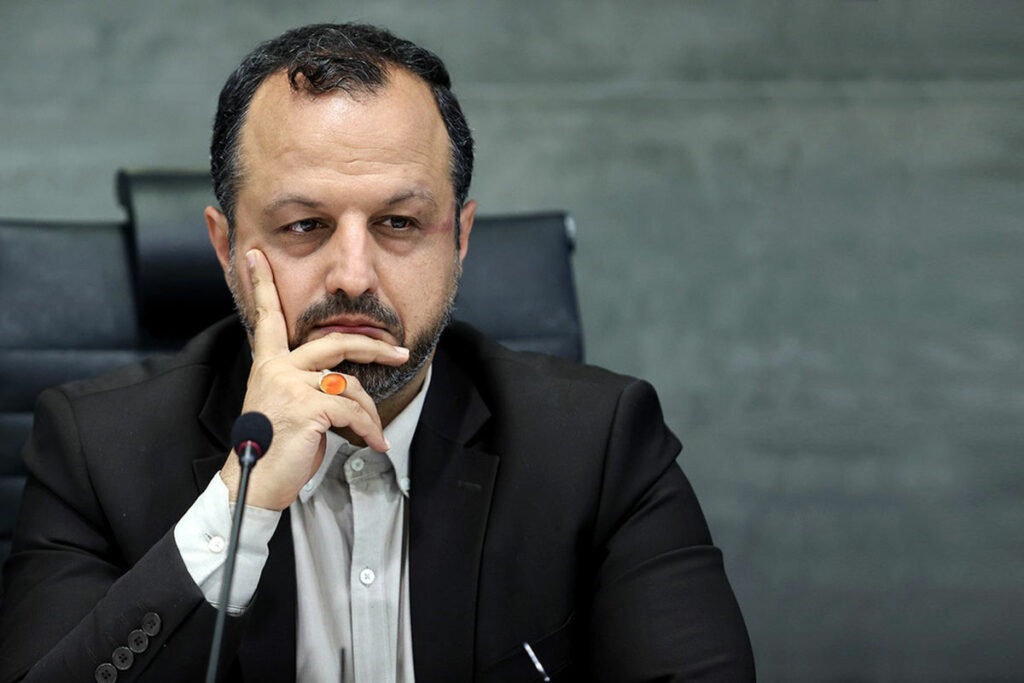
During a recent meeting with digital economy stakeholders, the Minister of Economy addressed remarks made by some media outlets regarding the seizure and confiscation of private businesses. He emphasized:
“As the government’s economic spokesperson, I must state that some of the recent non-expert opinions about the confiscation of private sector assets are neither accurate nor valid under the Constitution, Islamic law, or our principles.”
According to the Public Relations Office of the Tehran Electronic Commerce Association, the meeting included representatives from prominent startups and tech companies such as Digikala, Snapp, Alibaba, Zibal, Max, Karnameh, Azki, Wallex, Divar, and others. The session, held at the invitation of the Ministry of Economy, focused on discussing the challenges faced by the digital business ecosystem and the virtual space.
A Timely Moment for E-Health Legislation
Joubin Alaghaband, CEO of Lian Capital Group, highlighted challenges in Iran’s electronic health sector:
“E-health lags behind other online commerce sectors both in Iran and globally, capturing only about 1.5% of medical activities online. This is an opportune time to draft regulations addressing the legal gaps caused by the digitalization of health services before platforms grow too large.”
Lack of Industry Representation in Lawmaking
Nima Namdari, CEO of Karnameh, pointed out issues related to anti-money laundering (AML) regulations:
“We have AML laws with a secretariat under the Ministry of Economy and related guidelines. Unfortunately, many restrictions on digital businesses stem from interpretations by authorities regarding money laundering. To my knowledge, the AML center lacks organic channels for cooperation with industry associations, and no trade bodies are involved in decisions made there.”
Businesses Bear the Cost of Pioneering
Minister Ehsan Khandozi acknowledged the hardships faced by new-generation businesses in Iran’s historical economic transition:
“The difficulties and resistance you face compared to other countries are the costs of pioneering changes in income generation, employment, and economic growth. Those who successfully alter dominant economic models and create opportunities for innovative minds hold a special place.”
He emphasized the role of digital businesses in production, innovation, and cost reduction:
“The more these businesses flourish, the more we will witness a growing economy transitioning from traditional suppliers to platform-based providers.”
Non-Expert Opinions Are Misleading
Responding to media claims about business seizures, Khandozi reiterated:
“As the government’s economic spokesperson, I affirm that recent non-expert remarks about confiscating private businesses are neither precise nor correct from constitutional, religious, or ideological perspectives. Neither the government nor any other branch has plans for such actions, nor have these issues ever been officially raised.”
Supporting the Digitalization of Businesses
Khandozi stressed the ministry’s commitment to formalizing informal businesses and fostering tech-based enterprises that can capture larger market shares within Iran’s economy:
“The path to legitimizing businesses, shrinking the underground economy, and accelerating technology-driven growth will inevitably encounter challenges and dissatisfaction, requiring changes in the country’s political-economic rent system.”
Moving Toward Regulation
He added:
“The country’s policymakers accept that this vision will eventually dominate the economic landscape. We must actively accelerate policy-making to embrace, rather than resist, the digital economy’s transformation and move toward regulation. Digital businesses are expected to consider national and collective interests as part of their development.”
Businesses Should Set Pricing
Khandozi emphasized the importance of self-regulation regarding pricing on platforms:
“Many platforms must take responsibility for price formation. If not, price controls and oversight become inevitable. We must acknowledge real price fluctuations, and platforms should help ensure transparency, especially in sectors like real estate and airline tickets.”
Recognition of Cryptocurrencies
Regarding cryptocurrencies, the minister said:
“A regulation was drafted but became outdated due to concerns from various bodies. We are working to legitimize cryptocurrencies and digital assets and had hoped to do so in the government’s first year. With your cooperation, we hope to resolve this issue before further delays.”
Addressing Financing
On financing, Khandozi stated:
“Digital businesses can assist the government by facilitating funding through approvals by the Supreme Securities Council and the Securities and Exchange Organization. We will urgently raise this issue in the next Supreme Securities Council meeting.”
The Issue of Regulatory Conflicts
On regulatory conflicts of interest, he remarked:
“The fact that regulators sometimes have vested interests is a broad issue. We have so far neglected the clear separation of roles. We must explore solutions by consulting various agencies.”
The Tehran Electronic Commerce Association continuously strives to foster dialogue between businesses and government bodies to overcome obstacles facing the digital economy. We appreciate the Minister of Economy’s careful attention and the responsiveness of decision-makers to the unified voice of innovative businesses and remain ready for further cooperation with officials and policymakers.