Trade Union Actions to Improve the Digital Economy Environment: From Correspondence with the Government Legal Deputy to the Formation of a Union
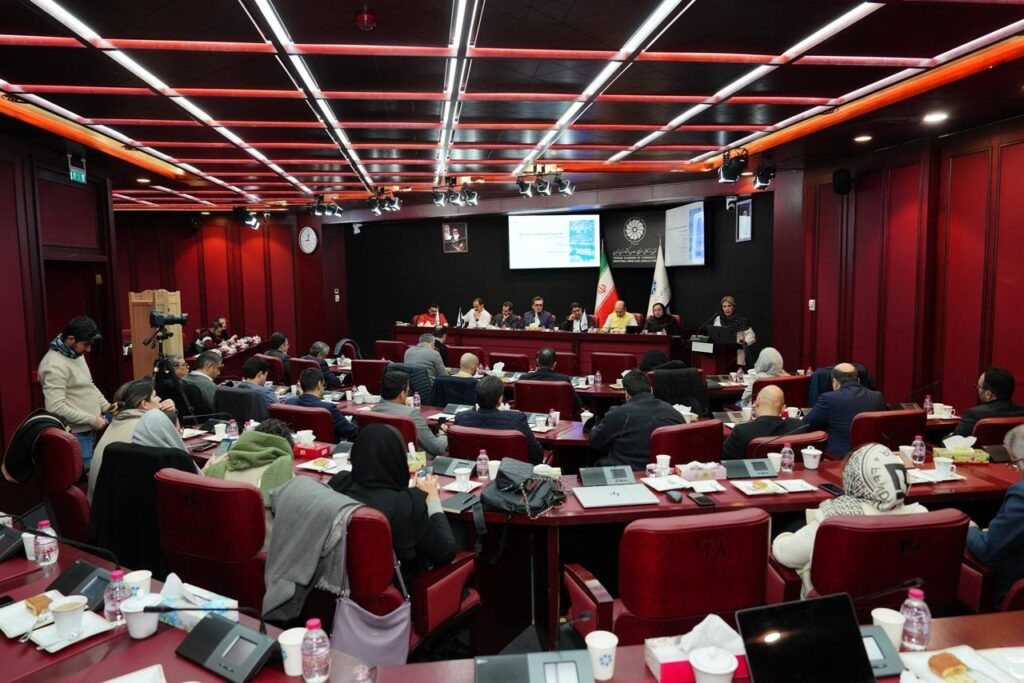
A gathering of CEOs and e-commerce stakeholders titled “Key Challenges of the Digital Economy: Reviewing 1403 with a Look Toward 1404” was held at the Tehran Chamber of Commerce building, attended by industry leaders, activists, and media representatives.
At the event, Maziar Nourbakhsh, Chair of the Digital Transformation and Innovation Commission at the Chamber of Commerce, emphasized the role of trade unions: “Worldwide, governments have largely failed in transferring private businesses to the public sector. As a result, many businesses have disappeared since the revolution. No effective action has been taken in this regard due to the complexity of the issue. The growth we have witnessed in digital economy companies over the years is due to the efforts of entrepreneurs who did not rely on government support. This trend must continue. Our role is partly reactive; we follow up on requests raised by businesses.”
Nima Ghazi, President of the Tehran Electronic Commerce Association, expressed satisfaction with the formation of the union: “We are pleased that genuine members of this ecosystem participated in the voting. Establishing the current union was the main demand of this trade. However, there were some issues, including the disqualification of some candidates for reasons unknown to us. We are currently witnessing signs of government deterioration, as evidenced in recent days.”
He continued: “In this situation, having organizations and real stakeholders gather to defend their rights and create order is invaluable. Earlier this year, after elections were held, the association set a goal to formalize a 10% share of the country’s GDP and growth of the e-commerce sector and present it at the highest government levels.”
Ghazi further explained the difference between the association and the union: “The union has a broader definition. Our role in the association is to foster cooperative relationships, while the union handles regulation, licensing, complaints, and enforcement roles. We encouraged many to run for union elections, but some were unwilling to take on this challenge. The re-establishment of the union is highly significant. Today, we also hear from union members and their expectations.”
Mission of the Association and Union: Delivering a Unified Industry Voice to Authorities
Mohammad Khalaj, Board Member of the Electronic Commerce Association, highlighted the association’s role: “When there was a lack of a cohesive trade organization, forming the Electronic Commerce Association to present a unified voice to authorities was a smart move that led to positive outcomes. Although legally the association may not fully equal the union, due to the effort made and the credibility of members, it has gained a strong position. We hope the new board members will foster synergy to avoid past difficulties.”
Khalaj added: “We strive to resolve internal issues and ensure the voice from our group is unified. With friends on the union’s board, good outcomes are expected. Being on the board is a trust, not a privilege, and does not create superiority. We welcome input and will work to address challenges.”
Commissions’ Plans for 1404
Rouhollah Rahbarpour, Chair of the Laws and Regulations Commission, outlined three focus areas for the upcoming year. He noted the ongoing work on platform responsibility since last year and said: “One priority is regulating regulators, as various organizations have hastily begun legislation. With Mr. Siyah’s presence, this commission can play an effective role.”
He also identified business data access as a key issue, highlighting user trust and concerns over government data leaks. Another focus is support for knowledge-based companies, where tax exemptions have recently been applied inconsistently.
Digital Health Commission Challenges
Nima Fazeli, Chair of the Digital Health Commission, discussed obstacles in digital health development: “Formed in 1403, this commission faces a heavy security shadow over the health industry causing many problems. Unlike other countries, private sector stakeholders and payers are often excluded from regulatory discussions, leading to decisions that burden businesses or are ignored by powerful insurers. There is little willingness to improve the situation at the executive levels. We will strive for legal improvements in 1404.”
Union’s Role in Improving the Digital Economy Business Environment
Reza Efteh Nasab, Chair of the National Virtual Businesses Union, praised the Electronic Commerce Association’s support in preserving the union’s status: “I personally witnessed their commendable efforts during union elections.”
He stressed that union board positions should be held by senior industry figures. According to Articles 27 and 28 of the relevant regulations, businesses without licenses can be sealed or temporarily closed, which has been challenging. Past government issues delayed elections, and fraudulent businesses highlighted the need for these regulations. The union is also tasked with drafting regulations for laboratories, a positive development.
Efteh Nasab pointed out ongoing union efforts across sectors such as housing, automobiles, gold, and health. He noted major businesses have proposed self-regulation models, which the union should promote. Recent board elections brought members from across the country, but challenges remain with smaller businesses requiring support.
Peshotan Pourpezeshk, Union Board Member, remarked: “The recent election was the first in the digital economy sector with broad support from associations and trade organizations. However, some key members are missing from the union board. We face a backlog of three years of work alongside ongoing demands from authorities and businesses. We hope to accomplish much by the new year.”
Rooza Mojtahedzadeh, another board member, noted: “The union has many pending tasks from the past that need hard work to complete. Our experienced members can perform well in crises. We aim to use a data-driven approach to identify industry needs and share six-month and annual progress reports.”
Trade Activities: From Reaction to Participation
Maryam Najafi, Secretary of the Electronic Commerce Association, reviewed 1403 activities and outlined 1404 plans. She noted the association now has 64 members, with 18 new ones joining this year. “We are still learning about trade union work. Digital economy trades are much younger than others, and with motivation and willpower, we hope to increase our impact.”
Najafi said the association’s approach is specialization-driven, with four active commissions as its executive arms. The goal is to become the authoritative body defending business rights while maintaining positive relations with government and lawmakers.
She added: “We have engaged in many advocacy efforts related to current events, such as DigiKala’s payment gateway shutdown, lack of social security support, and internet quality issues. Through media and commissions, we provide expert perspectives. We believe trade work must have a clear approach—some actions are reactive and legally professional, others are participatory, like our active involvement in platform responsibility legislation, which needs awareness-raising. We also provide consultancy, as many of us belong to specialized companies, and lawmakers should benefit from our expertise.”
The gathering of the Tehran Electronic Commerce Association members and the National Virtual Businesses Union board, titled “Key Challenges of the Digital Economy: A Review of 1403 with a Look to 1404,” featured discussions on digital health, internet and infrastructure, retail tech, and laws and regulations. The event concluded by emphasizing the union’s role in improving the business environment and enhancing cooperation between the union and association as private sector representatives.