Report by the Head of the Tehran E-Commerce Association on Meetings with the President and the Heads of the Three Branches of Government
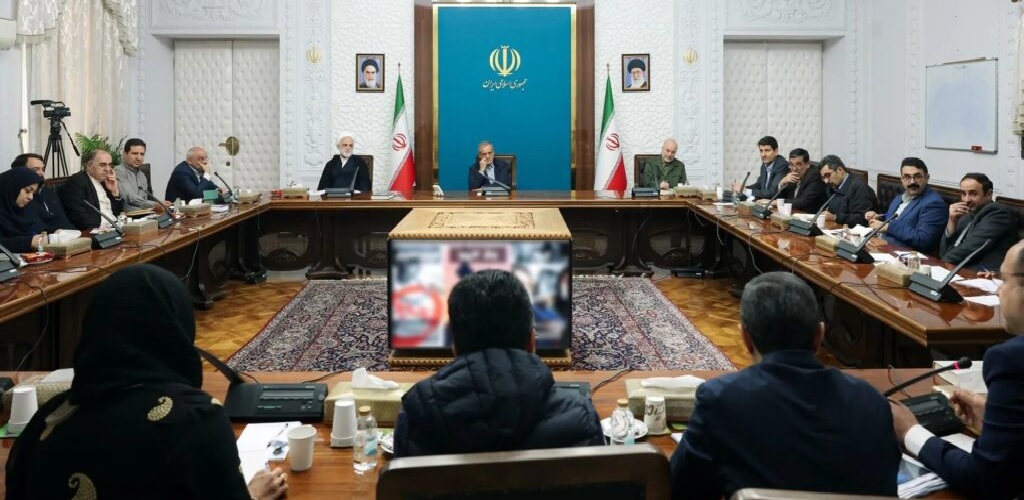
The President of the Tehran E-Commerce Association has outlined details of recent meetings between digital economy stakeholders and the President, as well as the heads of Iran’s three branches of government, highlighting key government commitments to strengthening the role of the private sector in digital economy decision-making structures.
According to the Public Relations Office of the Tehran E-Commerce Association, Nima Ghazi, President of the Association, presented a report during a specialized session titled “From Challenges to Solutions,” attended by representatives of the Central Bank and executives from digital economy businesses. He explained that over the past two weeks, multiple meetings were held with the President and the heads of the three branches, during which private sector representatives were able to directly and without intermediaries raise critical issues with the country’s top decision-makers.
Ghazi noted that following the presentations by economic stakeholders, the President promised to convene an official meeting involving the heads of all three branches—a promise that was fulfilled very quickly.
Referring to one of the main topics of discussion, namely the composition of the Digital Economy Task Force, Ghazi said that during the meeting with the President, questions were raised about which businesses were represented in this body. When it became clear that no private sector representatives were included in the decision-making structure, a proposal was put forward to allocate 50 percent of the seats and 30 percent of the voting rights to the private sector.
He added that during the same meeting, the Minister of Economy, through swift decision-making, committed to establishing a Digital Economy Dialogue Council, creating an independent unit within the Deregulation Board, and actively pursuing the resolution of issues related to the Central Insurance authority.
Regarding the meeting with the heads of the three branches, Ghazi explained that despite efforts to include a broader and more diverse group of representatives from the digital ecosystem, time constraints made this impossible. As a result, the final presentation focused primarily on issues related to the Judiciary and the Parliament.
Emphasizing that delays in decision-making in the digital economy could lead to the loss of major opportunities, Ghazi stated that serious concerns were raised during the meeting about the Supreme Council of Cyberspace and the absence of private sector representation in key decision-making bodies.
He further noted that topics such as internet access, filtering policies, and investment were also discussed. Commitments were made to hold a session with the Parliament Research Center to review relevant legislation, as well as to establish a Digital Economy Dispute Resolution Task Force within the Judiciary, with the participation of private sector representatives. The Association was asked to nominate private sector representatives for these roles.
During the session, Ghazi announced that the presentation materials from these meetings would be made available to the media and stakeholders in the digital economy. The file containing the digital economy stakeholders’ presentation will be accessible for download.