Kariz: A Vision for the Technological Empowerment of Iranian Youth
Hasti Shahrizfar, Digital Rights Activist in Iran and Board Member of the Iranian Association for the Protection of Child Laborers:
Understanding the experience of the digital divide in developing countries such as Iran cannot be attributed to a single independent variable. Technology sanctions, combined with certain domestic policies and the manner in which the required infrastructure is developed in these countries, collectively produce the digital divide. International sanctions have, in effect, divided the world’s nations into poles of superior, moderate, and limited access to technological resources, a situation that has placed Iran at 80th place among 200 countries in terms of the level of digital divide.[1]
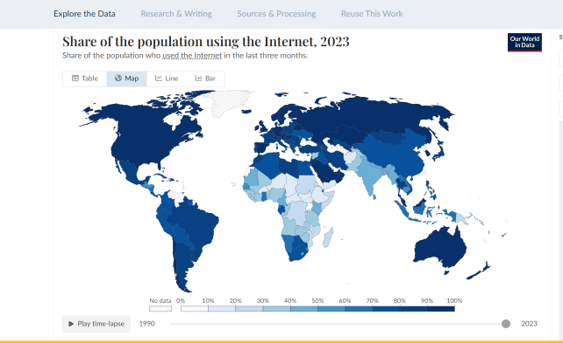
Examples include the sanctioning of access to skill-based and applied domains, the sanctioning of general access companies, and restrictions on access to primary technological resources and digital education materials. This is one side of Iran’s digital divide. However, within a vast country such as Iran, we also confront an internal divide between large and small cities, each with distinct geographical and political characteristics. The proportion of young people residing in underserved regions of Iran deserves particular attention. Iran is a country with a population of approximately 90 million, of whom one quarter are young people, and approximately 13 percent of these young people live in provinces and regions affected by the digital divide.[2] The share of Iranian youth in the NEET[3] index reflects a condition of exclusion from education. According to available reports, the NEET rate for Iranian youth has been cited at between 30 and 70 percent. This means that, out of 10.5 million Iranian young people aged 15 to 24, and in the worst-case scenario as many as 8 million, are neither employed nor in education.
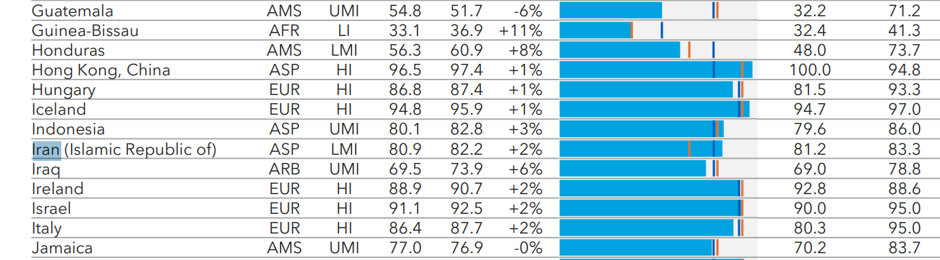
This internal digital divide has ultimately contributed to a decline in Iran’s standing across technology-related indices. What stands out, however, is that despite all of these constraints, Iranian youth rank third globally in the Talent and Human Affinity index, a technology literacy indicator, placing alongside developed nations.
When we examine Iran’s performance against economic indicators (where technology translates into welfare), we encounter factors such as fundamental weaknesses in access-related policymaking. All of these factors, in combination with technology sanctions, exert a compounded and multiplied impact on young people and their access to knowledge resources. These elements operate in a domino effect across every emerging technology paradigm, holding back young people with genuine potential.
Kariz[4]: A Modest, Progressive Effort to Narrow the Digital Divide
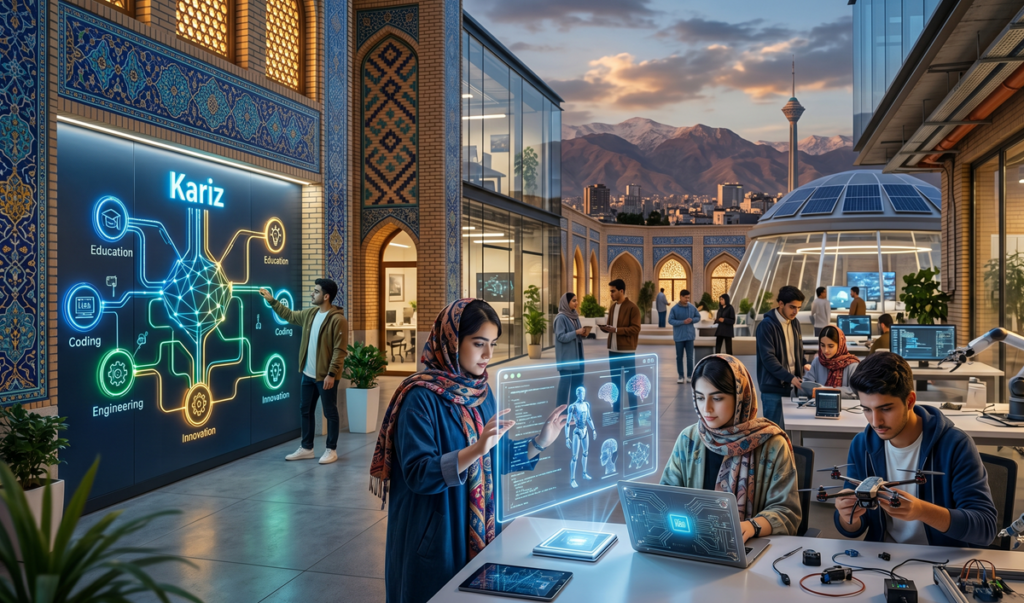
Setting aside macro-level solutions and the political economy of the issue, small-scale, equity-oriented solutions have been defined and implemented within Iran itself. Among these are various initiatives aimed at voluntarily delivering technology education to residents of Iran’s underserved regions. In one strand of this activity, private companies, upon reaching a stage of institutional maturity, have begun sharing their specialised knowledge freely, voluntarily, and in accordance with international standards. Examples include the Arvan Academy initiative, which offers free DevOps education through openly accessible video content for Iranians, and a group known as Karyar, which provides scholarships for individuals from underserved backgrounds and promotes knowledge-building in the IT sector. Organisations such as the Technical and Vocational Training Organization, Iran Digital, Rahnema College, Techno Sharif, Quera, and others also fall within this category. One further example is the corporate social responsibility initiative known as “Kariz.” This program has been active since 2020 and has to date provided training in web programming, networking, UX/UI design, digital marketing, and related fields to adolescent and young adult learners across 16 underserved cities in Iran. Kariz’s educational courses span two to three years and are designed with rigorous quality standards and a focus on preparing learners for the labour market. The program’s architects aim to ready, accompany, and empower young Iranians living in underserved regions for entry into the workforce.
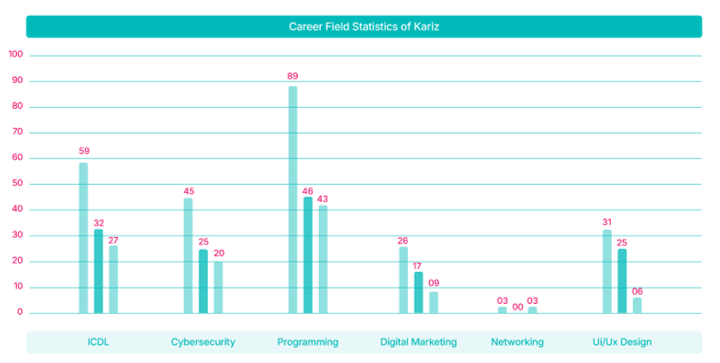
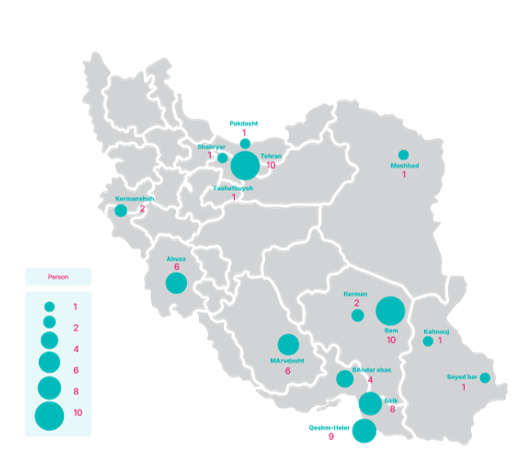
Kariz has been designed to help establish the right to access specialised digital education in underserved (or less-developed) regions, while simultaneously creating conditions for this cohort of learners to enter the labour market on an equal footing with other candidates. To date, more than 250 learners from the cities of Kerman, Bam, Zabol, Bandar Sirik, Minab, Qeshm, Bandar Abbas, Marvdasht, Kermanshah, Hamadan, Sistan and Baluchestan, Saveh, Alborz, Babol, Gorgan, Mashhad, and marginalised districts of Tehran have had the opportunity to participate in this educational pathway. Of these, female learners account for 55.3 percent and male learners for 44.6 percent.
The program has also endeavoured to address dimensions of cognitive empowerment, individual self-awareness, and social empowerment through the design and delivery of soft skills workshops, thereby contributing to holistic development for its learners.
How Does Kariz Select Its Learners?
With a focus on education and empowerment at the local level,[5] Kariz brings learners into its educational process as follows:
- At the outset, local resources such as NGOs are engaged to refer prospective learners. Over the years, 88 percent of learners have been referred by NGOs, among them organisations such as the Association for the Protection of Child Laborers, Yaran-e Danesh va Mehr, and the Farouq Charity of Bandar Sirik.
- The capacities of local community activists are identified, and through their collaboration and facilitation, the program is implemented within local communities.
- Learners are selected from the 18–24 age group (and previously from the 14–24 age group), based on individual interests and aptitudes.
- The necessary infrastructure for the program is provided through the establishment of dedicated sites at local hubs. (To date, Kariz sites have been established in the cities of Marvdasht, Zabol, Bandar Abbas, Sirik, Ahvaz, Heler, and Yasuj.)
- Upon completing the educational stages, introductory, advanced, and internship, learners are prepared for entry into the labour market.
Concurrently, Kariz works to support the formation of technology-based business ideas among learners by building local networks and creating channels of communication between them. It also facilitates the connection of learners and their business concepts to the local ecosystem through networking with local institutions and the local technical community, such as science and technology parks.
Challenges and Lessons Learned
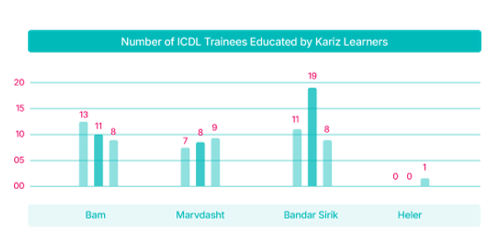
Like any educational or developmental intervention program targeting at-risk regions, Kariz has encountered a diverse range of challenges. Our observations indicate that the primary reasons for learner dropout have been rooted in underlying cultural and contextual factors, including family pressure, misperceptions about technology within the region, early marriage, and the extended duration of the training and market-entry pathway.
Additional challenges and lessons learned from this program are outlined below:
“Technical, Social, and Cultural Infrastructure Challenges Within the At-Risk Region Itself”
1. A shortage of technological infrastructure for online learning, attributable to sanctions and inflation (including the costs of procuring equipment, etc.).
2. The novelty of this experience in the early stages meant there were significant weaknesses and insufficient oversight of learners at the initial intake cohorts. This led to more controlled and deliberate admission processes by the third and fourth cohorts, carried out with the involvement of social workers and, subsequently, with the addition of soft skills training.
3. Learner dropout from the educational process due to family obstruction, with reasons including poverty (compulsory child labour), early marriage for girls, migration, and social welfare concerns (general family-related issues).
4. A lack of learning opportunities or skills development resources during learners’ childhoods resulted in lower scores on psychological assessments. This was not attributable to lower individual intelligence, but rather to environmental factors such as educational deprivation during childhood.
5. A lack of understanding of technology education among children in underserved regions, which necessitated local facilitation work.
6. A misalignment between the curriculum and resources of the formal education system and the requirements for facilitating such activities, for instance, the absence of technical equipment or the lack of a facility equipped with the appropriate infrastructure to support online learning.
7. A shortage of IT teaching capacity; the majority of instructors and educational content are concentrated in the capital. Given the low income levels in the education sector, travelling to these regions and delivering in-person instruction is not economically viable for teachers, given associated travel costs.
8. Internet outages and the disruption of online learning sessions.
9. War, natural disasters, and other crises in 2025 and 2026 have had a detrimental effect on learner motivation.
10. The complexity of immigration policy and labour market integration in Iran for migrant learners (primarily Afghan nationals) has led to incomplete training outcomes for this group. As a result, in the new phase of Kariz’s operation, we have regrettably been unable to accept non-Iranian nationals. (For example, to date 26 Afghan learners have enrolled in Kariz, of whom only 6 successfully completed their training, while three migrated to another country during the course of their studies.)
10. The psychological dimension of young learners’ encounter with technology education: our experience suggested that the very act of engagement between an educational sponsor, in this case a prominent technology company, and adolescent or young adult learners in an at-risk region carries with it an implicit message: “every course of learning is a lifeline.” These factors, compounded by cultural and social difficulties, also contributed to learner dropout, albeit in smaller numbers. From a qualitative analytical standpoint, contributing factors include social welfare concerns (family difficulties), anxiety arising from encountering new course content, the inability to pursue education alongside employment, anxiety in relation to other learners, early marriage, and migration. To address this, we acknowledged that some of these consequences were rooted not only in the cultural and social structures of the region, but also in the traditional structure of our own training model and the entanglement of social welfare and educational responsibilities within Kariz’s own management. As part of our process reform, we decided to draw a clear boundary between education and social welfare support, so that a learner would not receive both emotional support and skills assessment from the same individual. We also restructured our feedback loops, evaluations, and assessments in a systemic manner to avoid any traditional confrontational approach or verbal reprimand, thereby preventing the psychological burden of individual feedback on learners. The Kariz School and its transition to a platform model were established in direct response to this challenge.
Conclusion
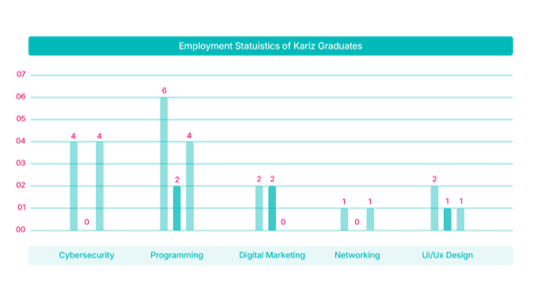
Iran is a country that, independent of external political factors, faces a digital divide relative to developed nations. Whatever its causes, this divide has, through the compounding effect of domestic decision-making policies, produced an internal divide between the country’s various provinces. Kariz stands as one example of a program that, through rigorous learner selection and an uncompromising focus on educational quality, has achieved considerable success in this domain. To date, 66 Iranian adolescents and young adults have attained digital literacy through its curriculum, and one third of them have entered the labour market in roles directly related to their Kariz training.
[1]https://www.itu.int/hub/publication/d-ind-ict_mdd-2024-3/
[2]Based on official statistics from the Statistical Centre of Iran (2023 estimate), less-developed provinces typically include Sistan and Baluchestan, Hormozgan, South Khorasan, Kerman, North Khorasan, Kohgiluyeh and Boyer-Ahmad, Ilam, and several others (including parts of Lorestan, Kurdistan, and Bushehr).
[3]“Not in Education, Employment, or Training”
[4]Kariz is an underground channel historically excavated in the arid central provinces of Iran to channel groundwater to the surface.
[5]Technology transfer combined with community-based capacity building for sustainable livelihood development.